
Skin cancer screening
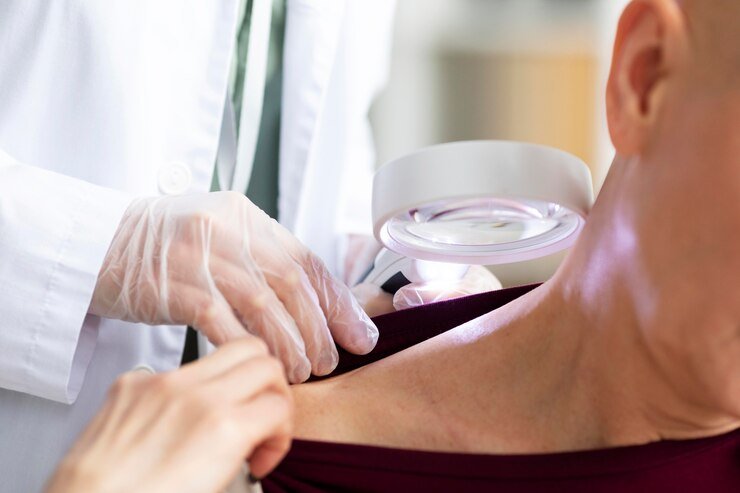
Skin cancer screening is an important preventative measure to detect skin cancer early, especially melanoma, basal cell carcinoma, and squamous cell carcinoma. Early detection is key for successful treatment, as skin cancer is highly treatable when caught early.
Types of Skin Cancer:
- Melanoma: The deadliest form of skin cancer, often arising from existing moles or as new pigmented spots.
- Basal Cell Carcinoma (BCC): The most common type, typically slow-growing and found on sun-exposed areas like the face, ears, and neck.
- Squamous Cell Carcinoma (SCC): Often appears as red, scaly patches, growths, or sores, and can develop from actinic keratosis (pre-cancerous patches).
Who Should Have Skin Cancer Screenings?
- People with a history of skin cancer: Those who have had skin cancer before are at higher risk of developing it again.
- People with fair skin: Fair-skinned individuals who are more sensitive to sunburn are at increased risk.
- Individuals with a family history of skin cancer: A family history of melanoma or other skin cancers increases your risk.
- People with a large number of moles: Those with many moles (especially atypical moles) are at higher risk of melanoma.
- Frequent sun exposure or tanning bed use: Individuals who spend significant time in the sun or use tanning beds are at a higher risk.
What Happens During a Skin Cancer Screening?
A skin cancer screening typically involves a full-body examination by a dermatologist. Here’s what you can expect:
- Physical Exam: The dermatologist will check your entire body, including areas that may be hard to see, such as your scalp, back, and the soles of your feet.
- Evaluation of Moles and Lesions: The doctor will look for any moles, freckles, or other lesions that have irregular features. These may include:
- Asymmetry: One half of the mole looks different from the other.
- Borders: Irregular or jagged borders.
- Color: Multiple colors or uneven color within the mole.
- Diameter: A mole larger than 6mm (about the size of a pencil eraser).
- Evolution: Any change in the size, shape, or color of a mole, or if it becomes painful, bleeds, or itches.
- Dermatoscope: In some cases, the dermatologist may use a dermatoscope, which is a special magnifying tool, to look more closely at the mole or lesion.
- Biopsy: If any suspicious spots are found, the dermatologist may recommend a biopsy. This involves removing a small sample of the tissue for laboratory analysis to determine if it’s cancerous.
Self-Examination
It’s also important to perform regular self-examinations of your skin at home. Here’s how you can do it:
- Frequency: Perform a self-skin check once a month.
- Method:
- Use a full-length mirror and a hand-held mirror to check all parts of your body, including hard-to-see areas.
- Look for any changes in the size, color, shape, or texture of existing moles or the appearance of new growths.
- Make sure to check your scalp, palms, soles, between your fingers and toes, and your genital area.
- A-B-C-D-E Rule: Use the ABCDE rule to identify warning signs:
- A: Asymmetry
- B: Border irregularity
- C: Color variations
- D: Diameter larger than 6mm
- E: Evolution or change over time
Importance of Regular Screenings:
Regular skin cancer screenings, whether at home or with a dermatologist, increase the chances of catching skin cancer early, leading to more effective treatment options and better outcomes. If you have risk factors like fair skin, sun exposure, or a family history of skin cancer, it’s especially important to schedule routine exams with a dermatologist.
Treatment of Skin Cancer:
If skin cancer is detected during a screening, treatment options vary depending on the type and stage of the cancer but may include:
- Surgical removal of the tumor.
- Cryotherapy or freezing of the tumor.
- Radiation therapy in some cases.
- Topical treatments for early-stage skin cancers.
Consulting with a dermatologist for regular screenings is the best way to protect yourself and detect skin cancer early. If you notice any unusual changes in your skin, it’s important to seek medical advice promptly.