
Liposuction
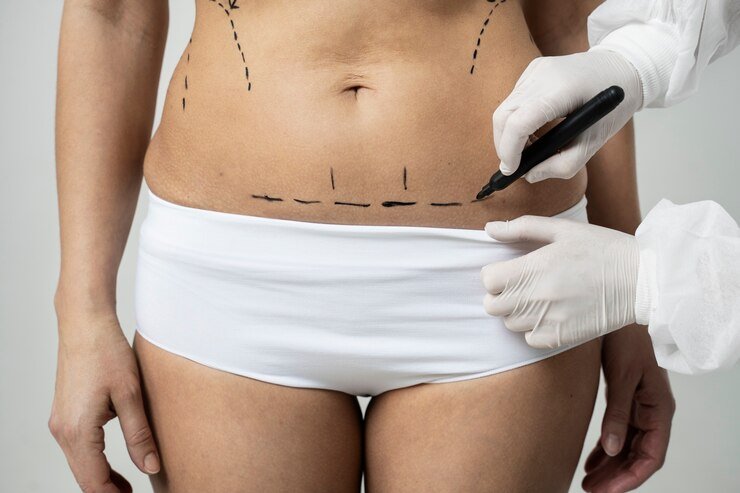
Liposuction is a popular cosmetic surgery procedure that removes excess fat from specific areas of the body to improve body contours and shape. It is not a weight-loss procedure, but rather a body contouring treatment that targets localized fat deposits that are resistant to diet and exercise.
Common Liposuction Areas
- Abdomen
- Thighs (inner, outer, or saddlebags)
- Flanks (love handles)
- Buttocks
- Arms
- Chin and neck
- Back
- Knees
- Calves and ankles
Liposuction Techniques:
There are different liposuction techniques that may be used, depending on the patient’s needs and the area being treated:
Tumescent Liposuction:
- The most common technique, tumescent liposuction involves the injection of a sterile solution containing saline, lidocaine (anesthetic), and epinephrine (a vasoconstrictor) into the targeted fat area. This helps minimize bleeding, reduce pain, and facilitate fat removal.
Ultrasound-Assisted Liposuction (UAL):
- Uses ultrasound energy to liquefy fat before it is suctioned out. This technique can be particularly effective for more fibrous areas (such as the back or male chest) or for larger volumes of fat removal.
Laser-Assisted Liposuction (SmartLipo):
- Laser energy is used to melt fat, which is then removed via suction. This method can result in less bruising and may stimulate collagen production, leading to skin tightening.
Power-Assisted Liposuction (PAL):
- A motorized cannula (a small, hollow tube) is used to help break up and remove fat more efficiently. This technique may reduce the surgeon’s effort and improve precision.
Water-Assisted Liposuction (Body-Jet):
- A gentle stream of water is used to loosen fat cells, making them easier to suction out. This technique can help with precision and minimize trauma to surrounding tissues.
Procedure Overview:
Consultation: The first step is a consultation with a board-certified plastic surgeon to discuss your goals, medical history, and which areas you would like to treat. Your surgeon will also evaluate whether you’re a good candidate for the procedure.
Anesthesia: Liposuction is typically performed under local anesthesia with sedation for smaller areas, or general anesthesia for larger treatment areas or more extensive procedures.
Fat Removal: Small incisions are made in discreet locations, and a cannula is inserted to suction out the excess fat. The surgeon will carefully sculpt the treated areas for a smooth and natural look.
Recovery: After the procedure, you’ll likely experience swelling, bruising, and some discomfort, but these symptoms typically subside within a few weeks. You may be given compression garments to wear for a few weeks to help reduce swelling and support the healing process.
Results: The final results of liposuction are usually visible after several weeks to a few months when swelling has fully subsided. The fat cells that are removed do not regenerate, which means that the results can be long-lasting as long as you maintain a stable weight.
Risks and Considerations:
- Common Risks: Infection, blood clots, asymmetry, and contour irregularities.
- Serious Risks: Although rare, more serious complications can include fat embolism (where fat enters the bloodstream) or damage to underlying structures.
- Not a Weight Loss Solution: Liposuction is designed for body contouring, not as a treatment for obesity. Ideal candidates are those at or near their ideal weight but struggling with localized fat deposits.
Ideal Candidates:
The best candidates for liposuction are generally:
- In good overall health.
- Within 30% of their ideal body weight.
- Non-smokers.
- Have firm, elastic skin.
- Have localized fat deposits that are resistant to diet and exercise.